Towards High-Performance PVC:
The Role of Graphene Oxide as a Structural Reinforcement.
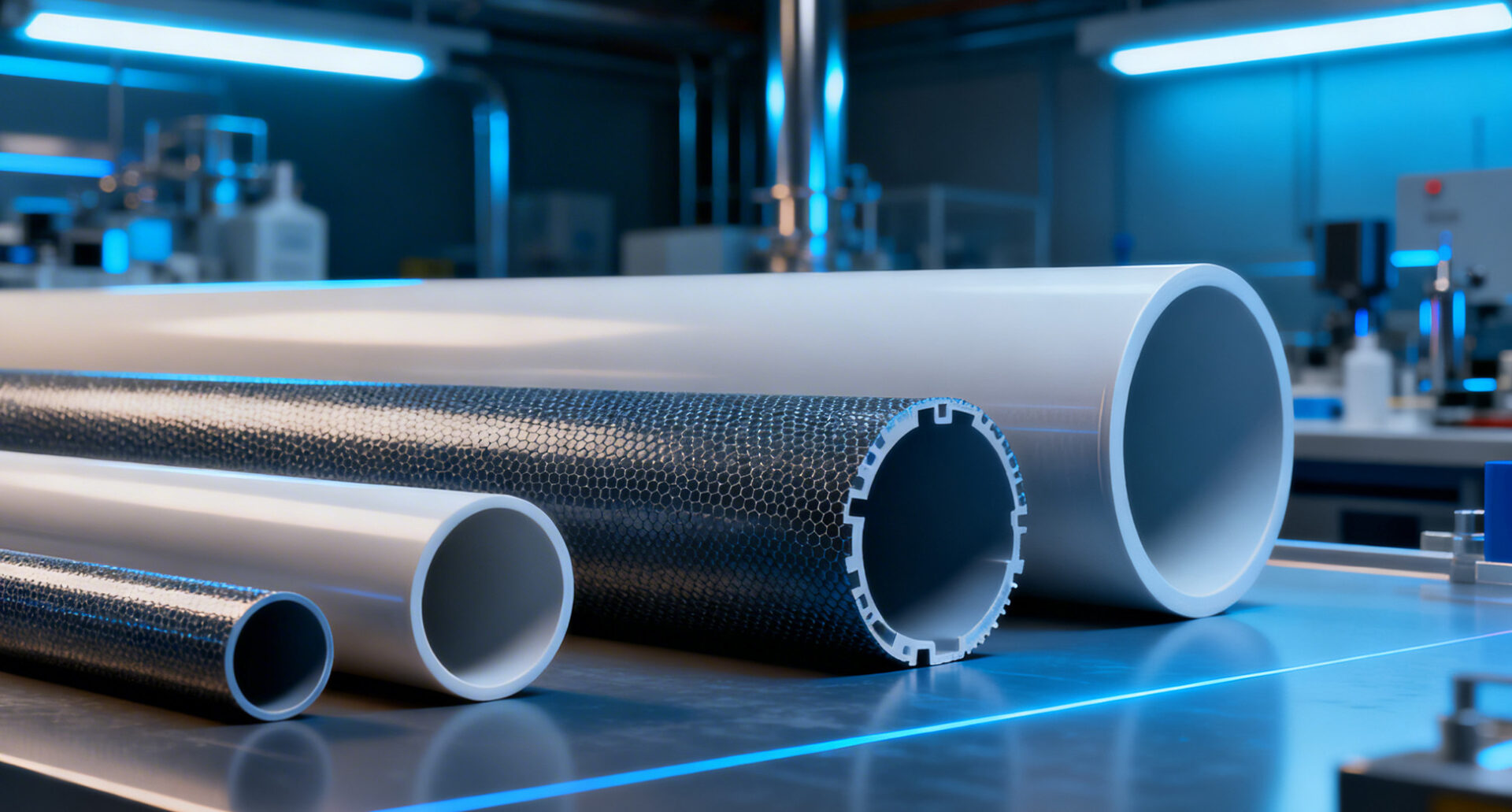
PVC, or polyvinyl chloride, has emerged since the 1930s as one of the most widely used plastics in the world. In fact, today it can be found in a large number of products for construction, the medical industry, transport, or packaging. It is a thermoplastic polymer derived from vinyl chloride that can be formulated as a rigid or flexible material, explaining its versatility for manufacturing everything from pipes, blinds, and cables to even medical bags, among other applications.
Although the PVC industry is quite solid, it has also been pressured not only by environmental demands but by the growing need for multifunctionality that differentiates it from other products to maintain or, failing that, to increase its competitiveness in the market. In this scenario, graphene oxide (GO), known for being a disruptive material, appears as the nanometric reinforcement that allows measurable improvements in key properties without modifying existing industrial processes.
What is graphene oxide and why is it relevant for PVC?
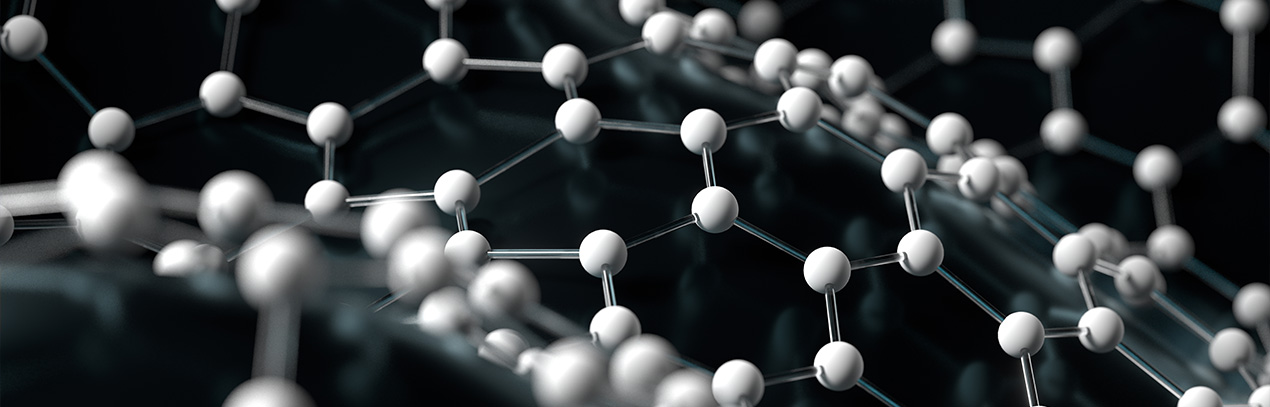
Graphene oxide is a sheet-shaped nanomaterial obtained mainly from graphite. Therefore, it is essentially composed of carbon atoms, but also by a large number of oxygenated groups (e.g., carboxyl, carbonyl, epoxy) that make it a polar material, easy to disperse and, consequently, compatible with polar polymers.
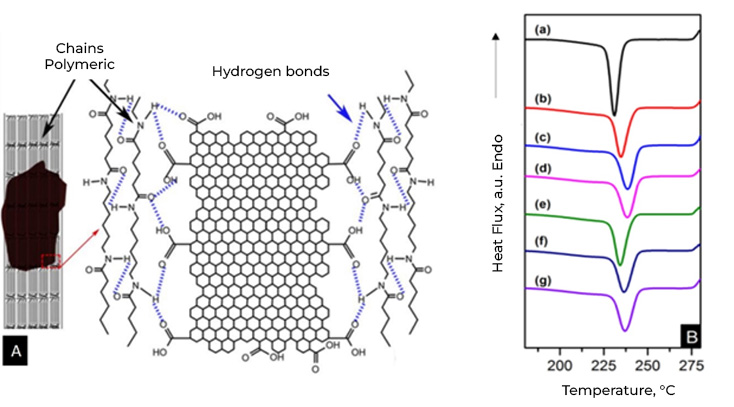
PVC is a polar polymer due to the C–Cl bonds in its chain. It is precisely this polarity that favors the formation of hydrogen bonds and dipole-dipole interactions between the PVC polymer chain and the surface of the GO, creating a favorable chemical interaction, unlike what occurs with other nanofillers such as carbon black, carbon nanotubes, nanoclays, or silica. Therefore, GO does not act only as a passive filler, but as a structural reinforcement element well-anchored to the matrix that, even with low loads (<2%), can achieve significant improvements in mechanical and thermal terms without affecting conventional PVC processes.
“With nanotechnology, it is not about using large quantities, but about doing it the right way, based on a good selection and integration of materials”

What are the mechanisms of GO to improve the characteristics of PVC?
Mechanical Performance
GO sheets have a very high elastic modulus and act as two-dimensional micro-reinforcements within the PVC. This translates into greater tensile strength, greater stiffness, and better stress distribution under load. In a real application, such as blinds, profiles, or technical PVC sheets, this can mean less deformation under its own weight, better wind resistance, lower risk of fatigue cracking, and even the possibility of reducing thickness and weight, and therefore, lower costs due to material consumption.
Barrier Properties
GO also acts as a physical barrier to the mobility of PVC chains and as a barrier to the diffusion of heat and gases. In practice, this improves the thermal stability of the materials and the resistance to deformation at elevated temperatures; therefore, and in the face of prolonged exposure to UV radiation, it is anticipated that GO can help maintain shape and appearance in the long term, providing added value and a potential differentiator for an intelligent evolution of PVC.
Other applications where the multifunctionality of graphene oxide can add value to PVC
- Pipes: GO reduces permeability to gases such as residual chlorine. This is key to prolonging the useful life of pipes, especially in aggressive regions such as coastal or industrial areas, where it can minimize fatigue cracks and corrosion.
- Roofing membranes or waterproofing: GO acts as a UV and thermal barrier, preventing yellowing and heat degradation. Some studies report up to 15-20°C more stability. In industrial paints or coatings, GO improves adhesion and resistance to abrasive wear, ideal for vinyl floors in factories or hospitals, reducing maintenance.
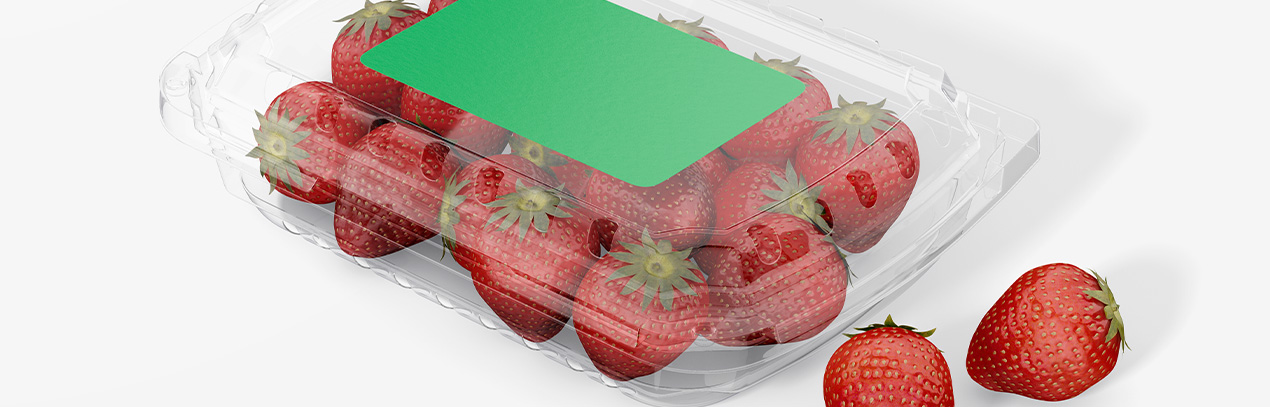
- Packaging: In addition to barrier properties, GO increases mechanical resistance, allowing for thinner products with antimicrobial properties and longer shelf life.
- Automotive compounds: In extruded profiles for car interiors or modular furniture, GO increases stiffness and reduces deformation under load, allowing for thinner walls and material savings between 10 and 15%. This favors lightweight applications in sustainable transport and modular design.
- Fibers for concrete: GO increases tensile strength and improves toughness through strong interactions (hydrogen bonds) between its oxygenated groups and the polymer. This generates fibers with a higher modulus of elasticity, thermal stability, and interfacial anchoring in the cement matrix, reducing micro-cracks, permeability, and shrinkage in fresh concrete.
While more research is needed, the advantages offered by graphene oxide to PVC align directly with the goal of net-zero emissions by 2050 by promoting material efficiency and extended life cycles that reduce global consumption of fossil resources, which drives industry growth in a more responsible way.
Editing: EF/Dania Hernández
References
- Wang, H., Xie, G., Fang, M., Ying, Z., Tong, Y., & Zeng, Y. (2017). Mechanical reinforcement of graphene/poly(vinyl chloride) composites prepared by combining the in-situ suspension polymerization and melt-mixing methods. Composites Part B: Engineering, 113, 278–284.
- Taher, A. A., Oraibi, A. H., Abd Ali, F. A. M., & Jaber, H. J. (2022). Mechanical properties of graphene oxide/polyvinyl chloride composite film. International Journal of Mechanical Engineering, 7(1), 669–673.
- Wilczewski, S., Skórczewska, K., Tomaszewska, J., Lewandowski, K., & Şentürk, Ö. F. (2024). Mechanical and thermal properties of rigid PVC and graphene nanocomposites obtained by melt-mixing. Polimery, 69(2), 112–120.
- Xiao, Y., Xin, B., Chen, Z., Lin, L., Liu, Y., & Hu, Z. (2019). Enhanced thermal properties of graphene based poly(vinyl chloride) composites. Polymer Composites, 48(8), 1348–1363.